

Why is it so Hard to Trace Supply Chains?
The data gap nobody’s talking about.
By: Tom Lagerman, Industry Principal at Tradeverifyd
The pandemic taught the world about supply chain fragility. Geopolitical tensions, tariffs, and regulations have turned supply chains into political footballs. Fragility and volatility created a need for supply chain resilience, but building that resilience is easier said than done. While supply chains are flush with data, they often lack the right data for surfacing upstream dependencies impacting resilience, tariff exposure, and compliance.
Discover how existing supply chain standards and data-sharing practices fall short of what decision-makers need.
Current Supply Chain Data Standards & Apps
Data standards underpin global supply chains that move billions of dollars in products every day. Trading partners use Electronic Data Interchange (EDI) to digitally exchange invoices, purchase orders, and other documents. GS1’s Global Location Numbers (GLN), Global Trade Item Number (GTIN), and Serial Shipping Container Code (SSCC) identify places, products, and logistics units.
The data is piped into enterprise resource planning applications (ERP), order, transportation, warehouse, and inventory management systems (OMS, TMS, WMS, and IMS) to give decision makers an overview of their supply chains.
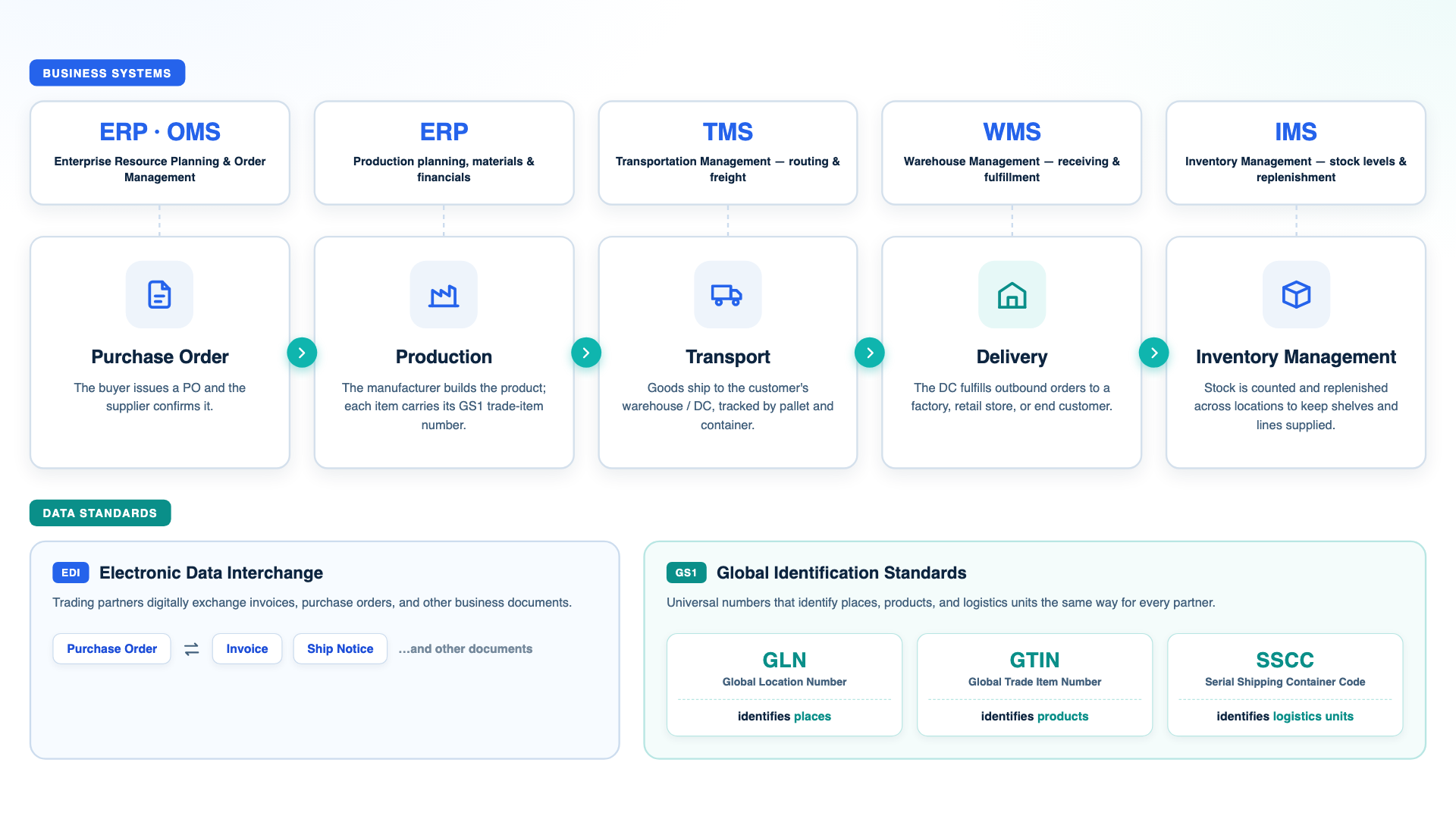
Together, these systems and data power supply chain control towers for operational efficiency. The tools are valuable for throughput, but often fall short when used for resiliency and traceability.
The Supply Chain Traceability Data Gap
Executive Order 14411, “Strengthening Customs Enforcement”, is unveiling the data gap facing nearly every importer today. Disclosure requirements and enforcement actions are increasing. Teams are scrambling to assemble the evidence required by CBP. Profits and production timelines are at risk. Assessing impact on SKUs and upstream parts has become a race; one that’s already outrunning the capabilities of today’s supply chain tools. Existing solutions are held back by missing data.
What data is missing? Visibility into nth-tier suppliers. Why is it missing? It’s a new need in global supply chains. Existing standards weren’t built to consider upstream traceability. EDI documents don’t call for sharing upstream supplier information. GS1 standards are applied for tracking finished goods inventory. These standards and tools aren’t designed to answer the questions these scenarios call for; they can’t point to an upstream parts supplier that was impacted by a natural disaster or what SKUs are reliant upon inputs that travel through the Strait of Hormuz.
For example, let’s consider a single wire harness on an automotive assembly line. Your ERP knows the Tier 1 supplier that ships it and the plant that receives it. The Tier 1 supplier buys connectors for the harness. The Tier 2 connector supplier buys copper rods from a mill it has never disclosed to anyone downstream. That Tier 3 mill buys cathodes from a smelter in Tier 4 that blends feedstock (Tier 5) from several countries into the same lot. So four tiers up, the origin facts that determine your tariff treatment and enforcement exposure are impacted by companies that don’t appear in your systems today. Nothing in EDI or GS1 was built to convey those facts downstream. The data isn’t there when you need it. Which means that when the detention notice arrives, the wire harness is a part number to you, and the answer CBP (or any regulator) wants is buried deep in the supply chain.
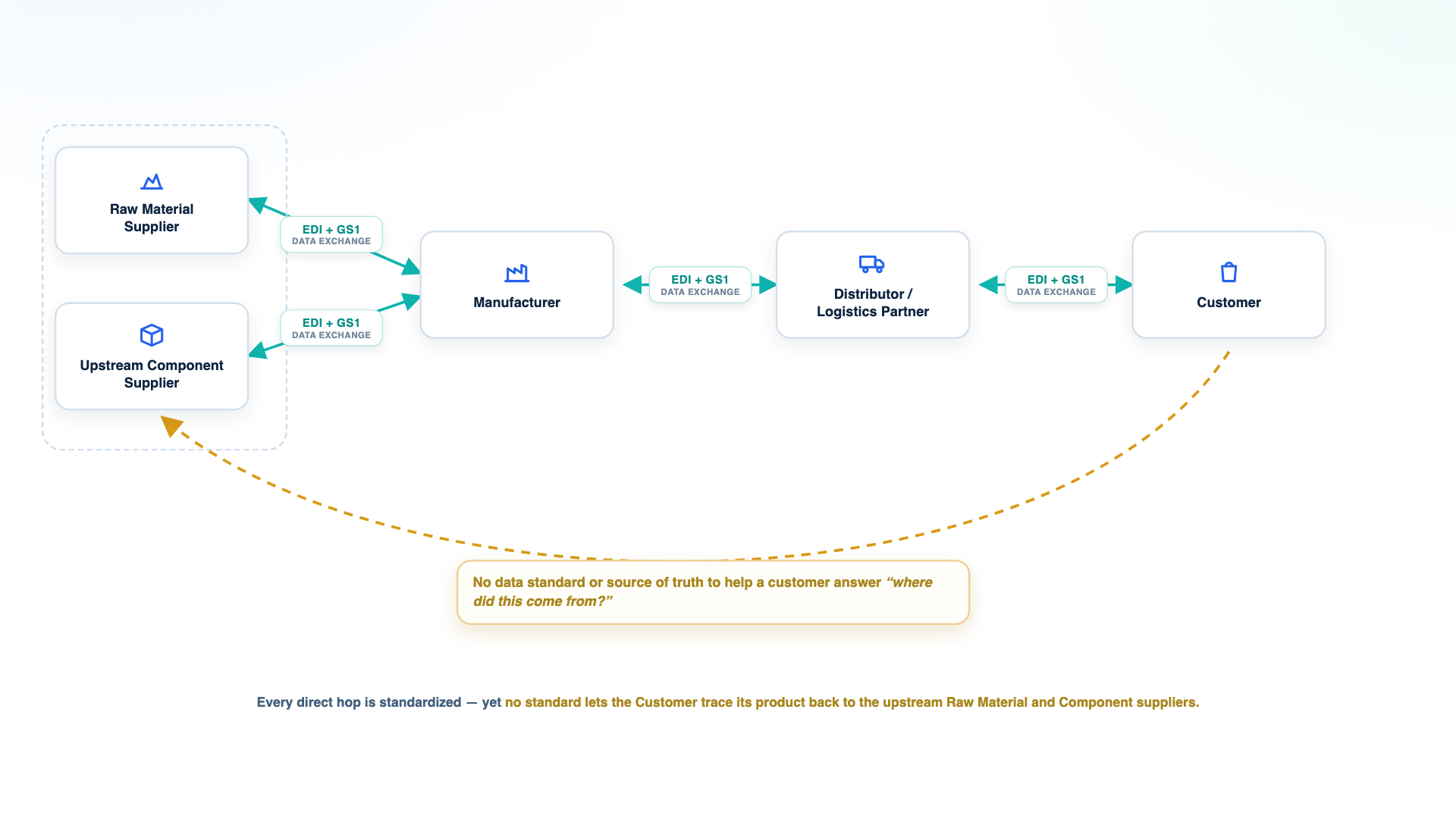
This information void isn’t anyone’s fault. Supply chain management always has been, and always will be, focused on operational efficiency. The existing data standards and applications are rightfully focused on solving those problems. Upstream traceability that powers resilience, risk management, and compliance needs new data, new perspectives, and new solutions.
Closing the Gap Starts With Finding Yours
New regulations like UFLPA and Digital Product Passports are setting new standards for upstream supply chain visibility and require new solutions. Tariffs and geopolitical tensions only raise the stakes for upstream visibility and resilience. The supply chain game has changed. The world’s new supply chain problems require a combination of first-party, third-party, and open-source intelligence to solve.
Here are a few steps to try today to better understand your gaps:
- Start with a question: All you need to get started is a few hours and a question. Something like “Can I identify which of my products use this input?” or “Can I trace the supply chain for my two most important products?” We recommend asking a question where data gaps are most likely to impact your business (sourcing concentrations, highest revenue products, frequent enforcement actions, etc.)
- Iterate Through More Questions With Your Data. Who supplies this input? From where is it supplied? What upstream suppliers are used? Which finished SKUs need this input? Who is supplying the components and parts for my most important products? Who do my Tier 1 suppliers source from and where are those materials sourced from?
- Try to answer them from what you have today. Time yourself. Can you answer the question? If you can, did the answer come quickly? Or will it take you days of emails to trace the parts and products you’ve prioritized?
- Mark where the trail goes cold. For most importers, it stops at Tier 1, or if you’re lucky, Tier 2.
- Check what the answer’s source is. A supplier’s attestation carries less weight with a regulator than your own site-visit, audit, or qualification documents. Do you think your evidence will be strong enough to influence a regulator and unblock a shipment?
I’m too busy. What’s the risk of skipping this?. Regulators expect importers to have their supply chains documented. If one of your shipments is subject to an enforcement action, it will be stuck until you have sufficient evidence to clear it. There’s no telling when that action may come, but when it does, the time pressure is intense, fees stack up, and products sit idle.
Skipping over data gaps leaves you exposed to future supply chain disruptions and delays. Importers who have mapped their upstream supply chains in advance are the ones who are best prepared to keep supply chains humming without any surprises.
Tradeverifyd’s agentic AI solutions empower our users to see upstream in their supply chains and do what’s right for their business. Our autonomous agents work through the new, messy, and disjointed data points to bring the right data and perspectives, fueling upstream actions that mitigate risks, build resilience, and keep the economy moving. Book a demo with Tradeverifyd to see behind the decisions your supply chain hasn’t been able to make yet.
AAEI Fall 2026 Virtual Annual Conference
Join AAEI on October 22, 2026 from 12–4 p.m. ET to hear from government officials, industry practitioners, legal experts, and technology leaders on the issues transforming global trade, including
Register Today! https://bit.ly/4hUzeaL