
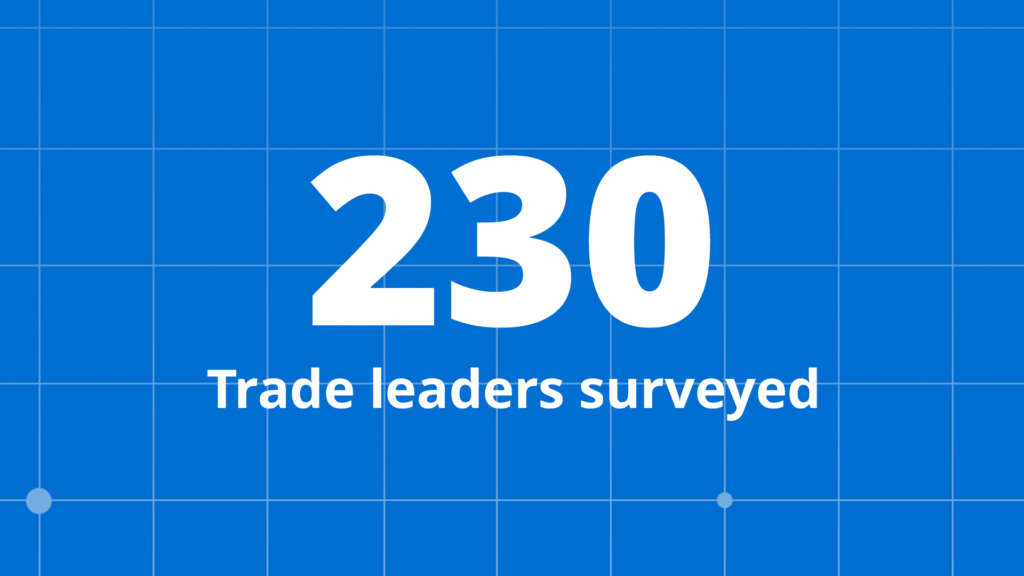
As trade regulations and tariffs have increased, so has the importance of trade and customs functions at major businesses. But according to a joint Altana and American Association of Exporters and Importers (AAEI) survey of 230 enterprise trade leaders, resources haven’t grown at the same pace as rising work volume and more complexity. More than half of trade operations at enterprise businesses are not ready for the demands of modern trade.
Rising tariff rates and more complex, demanding regulations have fractured the global trade environment. The importance and workload of the trade professional has never been higher.
But at major companies, this explosion in work and commercial value has not been accompanied with sufficient investment into new, better trade software or processes.
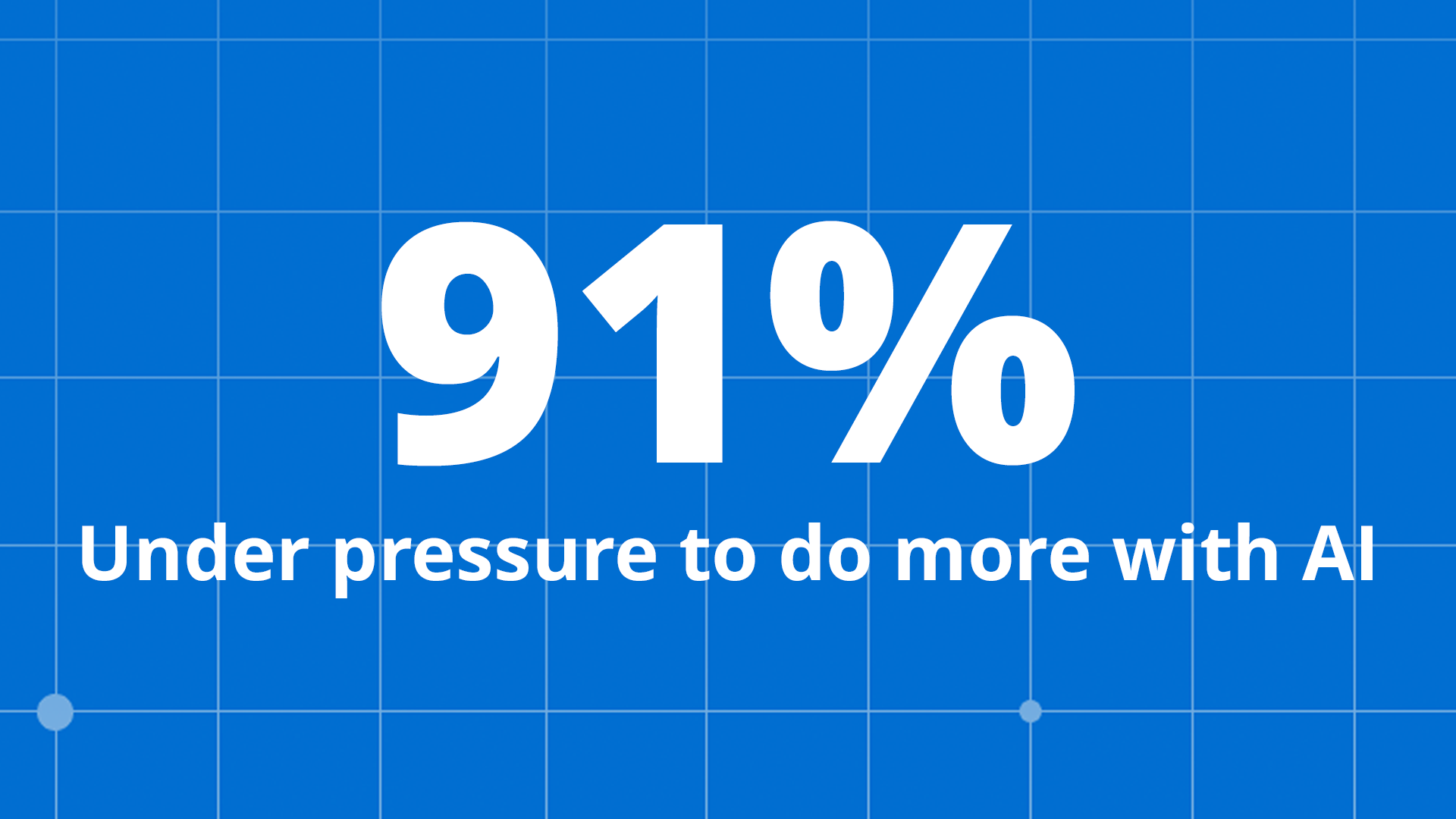
Altana and the American Association of Exporters and Importers (AAEI) sponsored a joint market research survey of trade and customs teams at enterprise businesses. Of 230 surveyed trade and customs leaders, 61% say their job has become significantly harder since the start of 2025. Only 26% feel their resources have grown enough to keep pace. 91% are under pressure to do more with AI.
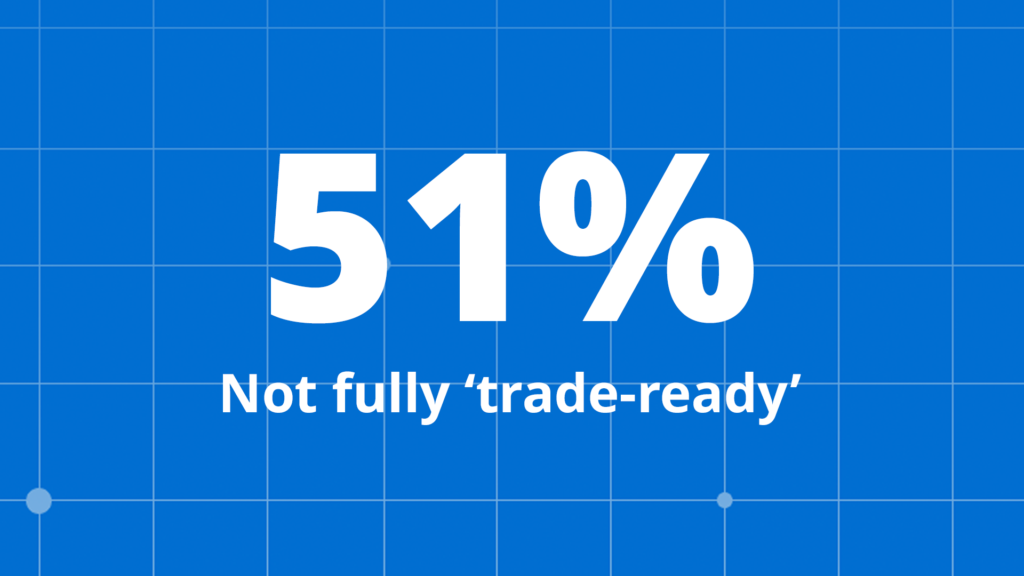
A composite scoring of respondents’ ability to perform eight vital, modern trade capabilities without crippling cost or time loss indicates that 51% of trade and customs departments at enterprises don’t meet the threshold of “trade readiness.” Trade-readiness is the ability to prep products to cross borders, and keep them ready even as rules change, without extraordinary cost or overwhelming loads of manual work. Businesses that are trade-ready have defensible evidence behind every product’s trade decision before it crosses the border. Businesses that aren’t trade-ready struggle to get complex, multi-tier products to cross borders without triggering denied party screening violations, overpaying or underpaying duties, or missing out on free trade agreement (FTA) qualification.
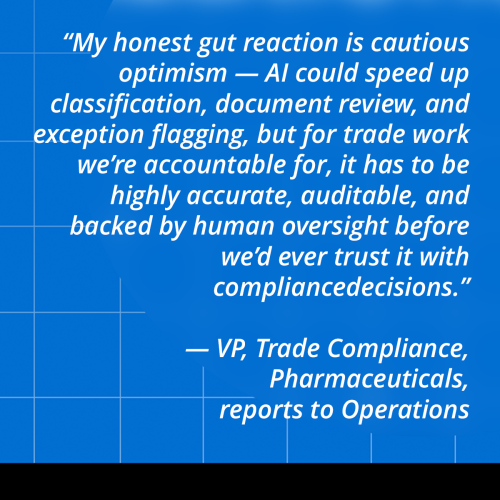
Along with these challenges are sources of optimism. Trade teams that are structured as independent business drivers — sitting alongside supply chain and operations departments, not below them — are less overwhelmed and are twice as likely to meet the scoring threshold for modern trade readiness. Optimism and willingness to use AI abounds, so long as the technology is secure, verified, and built for their trade operations and product catalogs. And even as a surge in regulations and complexity has swamped brokerages, enterprise trade teams remain confident in their broker filings, though both parties want smoother communication and more shared visibility into product information.
Explore the full report for the obstacles and opportunities facing modern trade compliance leaders, their departments, and the businesses they serve.
Methodology
Altana and the American Association of Exporters and Importers (AAEI) fielded this survey of 230 trade professionals at enterprise businesses in July and August of 2026.
To qualify, a respondent had to:
- Hold a Manager- through VP-level role in trade compliance, global trade, customs, or import/export operations
- Directly own or oversee customs compliance and/or brokerage operations
- Work at an enterprise physical-goods importer with at least $1 billion in annual revenue and a meaningful import-export business
- File at least 10,000 U.S. customs entries a year
Excluded from the survey were C-suite executives, sourcing and procurement leaders, responsible-sourcing owners, and anyone employed by a customs broker or trade consultancy
Stay Ahead of What’s Next in Trade
The challenges highlighted in this report, from increasing regulatory complexity and enforcement expectations to AI, data, and supply chain visibility—are shaping the work of trade professionals every day.
AAEI membership connects you with the experts, peers, insights, and advocacy helping the trade community navigate what comes next.